Key Takeaways
- Steps measure your daily movement in a simple, easy way.
- Most adults in their 70s benefit from 6,000 to 8,000 steps.
- A comfortable pace matters more than a big number.
- Walking supports your heart, balance, mood, and sharp thinking.
- Small habits, like a stroll after meals, add up fast.
What a Daily Step Count Means for You
You’ve probably heard the goal of 10,000 steps a day. That number can feel like a tall order, especially on days when your energy runs low. The good news is that 10,000 steps isn’t a requirement for staying active.
Many older adults can benefit from fewer steps, and every bit of movement adds to your daily activity. You can break your steps into shorter walks throughout the day to make movement more manageable.
What Your Step Count Tells You
Your step count is simply a way to measure how much you move each day. It turns everyday activity, like walking to the mailbox or strolling through the garden, into something you can track. That makes it easy to see how much movement you’re getting throughout the day.
The 10,000-step goal was originally connected to a Japanese marketing campaign rather than a specific medical recommendation. You can still support your health and fitness with fewer steps. Lower counts still count, and they still contribute to your overall physical activity.
Think of your steps as a personal target, not a finish line. If you walk a little more today than yesterday, you’re building on your current routine. Movement at any level can be part of an active lifestyle.
How Many Steps Are Right for Your Age
The right number depends on factors such as your age, health, mobility and current activity level. Here’s a closer look at what step counts can look like at different ages.
Steps for Those in Their 70s
If you’re in your 70s, around 4,500 steps a day can already support a stronger heart. That’s a reachable goal for many people, and it sets a solid foundation.
Aiming for 6,000 to 8,000 steps a day offers even more rewards. This range supports a longer, more active life while keeping your routine comfortable. You can build toward it slowly, adding a few hundred steps each week.
Steps for Those in Their 80s
In your 80s, a comfortable, steady pace matters more than hitting a high number. Listen to your body and move at a speed that feels right for you.
Shorter walks spread throughout the day can make it easier to stay active. A few minutes after breakfast, a loop around the hallway at lunch, and a gentle evening stroll all add up. You don’t have to do it all at once to reach your daily movement goal.

Health Benefits of Walking
Walking does more than fill a step counter. Walking on a regular basis can support several areas of your health, including your heart, balance, strength and mental well-being.
- Helps support heart health.
- Helps improve balance and may reduce fall risk.
- Builds leg strength and stamina for daily activities.
- Supports brain health and a positive mood.
You might notice these benefits show up in small ways. Climbing stairs may feel more manageable. Your morning walk can also give you a chance to start the day with movement.
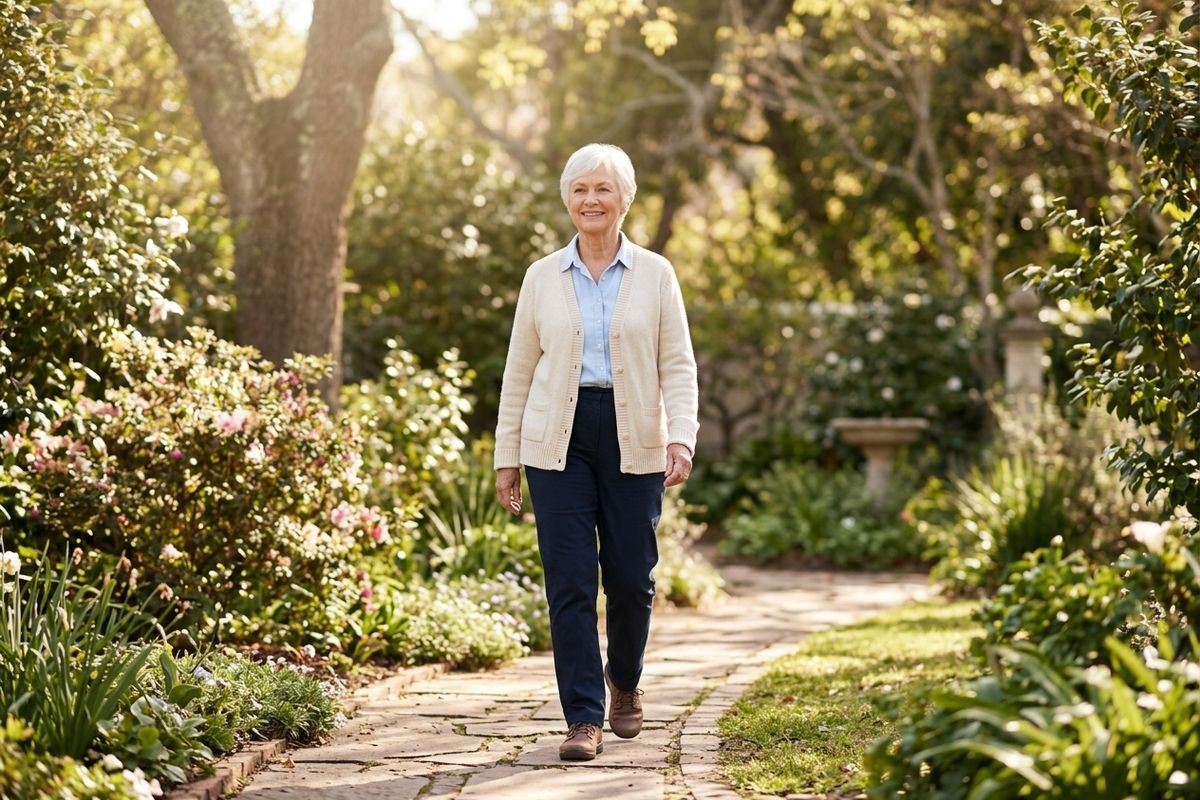
Walking also gives you a chance to connect with the world around you. A simple stroll can provide an opportunity to spend time outdoors or connect with a walking partner.
Simple Ways to Add More Steps
Adding more movement to your day doesn’t have to feel like a chore. Small, steady changes can help you build a routine that fits your day. Try these ideas to get started.
- Aim for a small increase in your daily steps, then build slowly from there.
- Take a short walk after meals to add movement to your routine.
- Park a little farther away or take the longer route to your destination.
- Join a group fitness class for movement and social connection.
Group activity can add a social part to your routine. Take part in classes that support fitness and wellness, like yoga or light weight training.
When walking feels social, a walking partner or group can also give you a reason to keep moving regularly.
Walk Toward a Fuller Life
Walking doesn’t have to mean chasing a specific step count. What matters is finding ways to keep moving that fit your health, mobility, and daily routine. A short walk, a group fitness class or a few extra steps throughout the day can all contribute to an active lifestyle.
At The Hidenwood, part of Retirement Unlimited, Incorporated (RUI), staying active is built into daily life. RUI FIT offers fitness classes and tailored wellness plans to support different fitness goals. Residents can also take advantage of walking trails throughout the landscaped community, courtyards, and other spaces designed for daily activity.
Schedule a tour today to start living the life you deserve.