
Key Takeaways
- Assisted living offers help with daily tasks while keeping independence intact.
- Memory care provides specialized support for people living with dementia or Alzheimer’s.
- Safety, staff training, and daily structure set the 2 care types apart.
- Watch for signs like wandering or trouble managing medications when deciding.
- Communities offering both options make transitions smoother as needs change.
How Memory Care and Assisted Living Compare
Choosing the right support for someone you love can feel like a lot to sort through. You want them comfortable, safe, and still able to enjoy each day at The Hidenwood by RUI. Two options often come up, and they sound similar but serve different needs.
Assisted living helps with everyday tasks while protecting independence, and memory care offers specialized, secure support designed for people living with dementia or Alzheimer’s.
What Assisted Living Offers
Assisted living gives a helping hand with the parts of daily life that have become harder to manage alone. Think of it as a steady presence in the background, ready when needed.
Residents enjoy support with things like dressing, bathing, meals, and medication reminders. The goal stays simple. Help where it matters, freedom where it counts.
Most residents live in private apartments and fill their days with social activities, shared meals, and friendly faces. You keep your routine, your privacy, and your sense of self. The support is there to lift you up, never to take over.
What Memory Care Offers
Memory care is built around the unique needs of people living with memory loss. Every detail, from the layout to the daily rhythm, works to bring calm and comfort.
These spaces feature secure entries, simple layouts, and steady routines that reduce confusion. A predictable day can ease worry and help residents feel grounded.
The team here receives training in memory-related care. They know how to respond with patience and warmth, meeting each person where they are. That kind of understanding makes a real difference in someone’s day.
Key Differences Between the 2 Care Types
Both options offer compassion and connection. Still, a few clear differences can guide your choice.
Safety and Environment
Memory care communities use secure entries and thoughtful layouts that reduce the chance of wandering. The design itself helps keep residents safe without feeling restrictive.
You might notice color cues on walls and doors, along with clearly defined common areas. These small touches help residents find their way and feel at ease in their surroundings.
Staff Training and Daily Structure
The team in memory care receives focused training in dementia support. They learn how to ease moments of confusion and offer comfort with a gentle approach.
Structured routines shape each day, which brings a sense of order and calm. When the day follows a familiar pattern, residents often feel more settled and secure.
Activities and Therapies
Assisted living keeps days lively with a wide mix of activities. These often include the following.
- Group games and friendly competitions
- Outings to local spots and events
- Fitness classes like yoga and strength training
- Social gatherings and shared meals
Memory care leans into activities that soothe and spark connection, such as music sessions, art projects, and reminiscence programs. These gentle experiences can bring joy and stir happy memories.
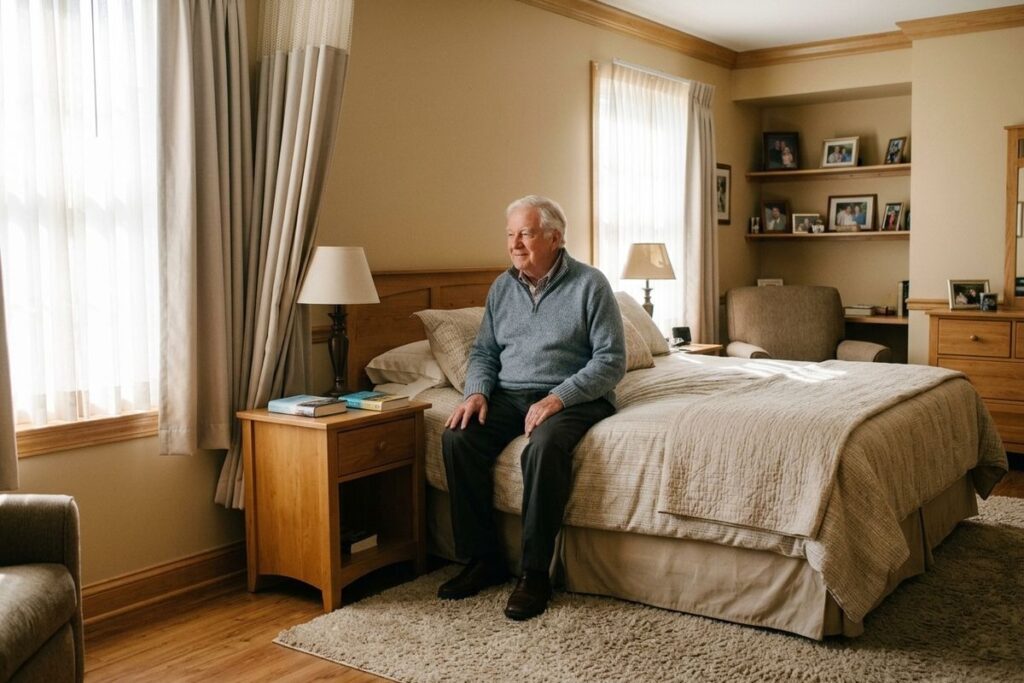
Older adult sitting on the edge of a bed in a sunlit bedroom, smiling and looking toward the window.
How to Choose the Right Level of Care
The right choice depends on where your loved one is today and what they may need tomorrow. A few key signs and questions can point you in the right direction.
Signs to Consider Memory Care
Certain changes can signal that memory care may be a good fit. Keep an eye out for these signs.
- Wandering or getting lost in familiar places
- Disorientation about time or surroundings
- Frequent forgetfulness that affects daily life
- Trouble with self-care or managing medications
If these moments happen often, it may be time to look closer at specialized support.
Cost and Coverage Questions
Memory care often costs more than assisted living because of the added support and training involved. Knowing this upfront helps you plan with clear eyes.
Medicare typically covers short-term medical needs rather than long-term care costs. Medicaid may help in some cases, though coverage varies by state and situation. It helps to ask each community about pricing and what assistance might apply.
Why Communities with Both Options Help
A community that offers both assisted living and memory care can make life easier as needs shift. There’s no need to start over somewhere new and unfamiliar.
Residents keep their familiar faces and surroundings, which brings comfort during change. Couples can also stay close, even when each person needs a different level of support.
Find the Right Fit at The Hidenwood
For over 38 years, The Hidenwood by RUI has welcomed residents with warm southern hospitality and a family-owned heart. This is a place where you’re known by name and cared for like one of the family.
Residents enjoy signature programs through RUI University, RUI FIT, and personalized support shaped around who they are. Whether you’re exploring assisted living, memory care, independent living, or respite care, there’s a place for you here.
You’ve earned a home that feels warm, supportive, and full of life. Schedule a tour today and see The Hidenwood for yourself.